Carb Phobia – Weight loss, Social Media, and Carbohydrates
Are Carbs Really Bad? The Truth Behind Carb Phobia and Weight Loss
Author: Petri Luhio, M.H.Sc. (Clinical Nutrition)
Registered Dietitian (Valvira licensed)
Sports nutrition specialist
Last reviewed: 23 June 2026
This article is for individuals struggling with weight loss, cravings, or confusion around carbohydrates
Key Takeaways
Carbohydrates are not inherently fattening
Weight loss depends on total energy intake
Restrictive dieting increases cravings
Sustainable nutrition requires flexibility
Somewhere along the way, carbohydrates went from primary energy source to public enemy number one.
Scroll any social media feed and you’ll see it: “Cut carbs, burn fat.” “Carbs make you gain weight.” “Low carbs are needed for weight loss.”
And it’s mostly wrong.
Let’s be direct: carbohydrate fear is not built on physiology. It’s built on oversimplification, and fear mongering.
Carbohydrates are the body’s primary energy source, and their role in weight management depends on total energy intake, not elimination.
From a clinical and performance standpoint, carbohydrates are not optional. They are a core energy substrate, especially for athletes, high performers, and anyone training with intent. The International Olympic Committee (IOC) and International Society of Sports Nutrition (ISSN) consistently emphasize carbohydrates as a primary driver of performance, recovery, and training adaptation1,2.
This is not opinion. This is biology.
Why Carbs Became the Villain
Carb phobia, the idea that carbohydrates are inherently fattening is based on three factors:
- Weight-loss marketing – Low-carb diets can work short-term for some individuals because they reduce total energy intake3. That doesn’t mean carbs are the problem.
- Misinterpretation of insulin – Insulin became demonized as a “fat-storage hormone,” ignoring its critical role in human physiology, and simplifying the role of insulin.
- Lack of context – Professional nutrition counseling rarely is about a single macronutrient3. But with social media and weight-loss marketing, it is easy to simplify reality.
For a sedentary individual, aggressive carbohydrate reduction might appear “effective.” Restrictions over long periods of time rarely work. That’s how the bodyweight roller coaster starts.
What Happens When You Fear Carbs
This is where theory meets reality. In everyday life, carbohydrate restriction often creates more problems than it solves. When carbs are unnecessarily restricted, people might experience:
- Increased cravings, especially for high-calorie foods
- Reduced dietary satisfaction
- Episodes of overeating after periods of restriction
In other words:
Restrictions can work momentarily. Start dieting on Monday, and often still Tuesday you are feeling good. On Wednesday you might already notice some cravings, and by Thursday or Friday, they become hard to resist. That’s physiology, not willpower. Remove or heavily restrict carb (and thus, energy), and the body compensates, often through stronger hunger signals and increased cravings.
This is one of the main drivers behind the all-too-familiar cycle:
Restriction → Cravings → Overeating → Guilt → Repeat
From a clinical perspective, sustainable weight management is not about restricting or eliminating one macronutrient. It’s about managing total energy intake in a way that is maintainable long term.
This is not about willpower.
Not All Carbs Wear Capes: Complex vs. Simple Carbohydrates
Here’s where nuance matters, and where most online advice falls apart.
Not all carbohydrates act the same way in the body. But labeling them as “good” or “bad” misses the point. Carbs serve different physiological roles than protein or fats and understanding that is important.
Simple Carbohydrates: Fast, Functional, Misunderstood
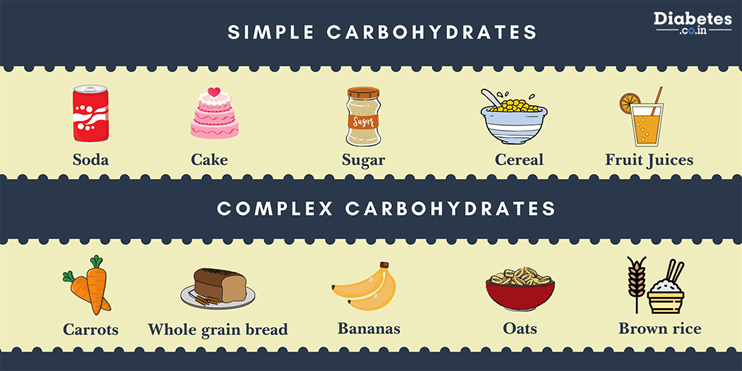
Simple carbohydrates are rapidly digested and absorbed, leading to a quicker rise in blood glucose.
Examples:
- Honey
- Juice
- White bread
- Sugars
These are often labeled as “bad” or “empty,” especially in weight-loss messaging.
In reality, that’s an oversimplification.
Simple carbohydrates can be useful when:
- You need quick energy between for physical activity
- Appetite is low but energy is needed
- When you feel like sweet dessert
- Supporting adherence by allowing flexibility in food choices
They are not inherently harmful. Overconsumption in a calorie surplus is the issue, not the carbohydrate itself.
Removing them completely often backfires in long-term by increasing cravings and reducing dietary flexibility.
Complex Carbohydrates: The Foundation
Complex carbohydrates digest more slowly and provide a gradual release of energy.
Examples:
- Oats
- Whole grains
- Potatoes
- Legumes
These foods form the base of a balanced diet because they support:
- More stable energy levels
- Increased satiety (feeling full longer)
- Higher micronutrient intake
- Better overall diet quality
Complex carbs are not “superior” either, they are good for regular, structured meals as nutrient and an energy source. Whole grains and plant-based carb sources are consistently linked to improvements in gut microbiome composition, including increases in beneficial bacteria and short-chain fatty acid production4. There is also emerging evidence that individual microbiome responses to whole grains can influence weight loss outcomes, but this area still requires further research4.
Carbs and Weight Loss: Structure, Not Elimination
Sustainable diet is not about choosing between simple and complex carbohydrates, or carbs and no carbs.
It’s about using them in a way that supports health and well-being, including mental health (e.g., happiness and less stress).
- Complex carbohydrates for meals, ¼ of the plate
- Include simple carbohydrates strategically for flexibility (or in some situations, when fast energy is needed)
- Focus on total dietary pattern, not single nutrients



Because long-term results don’t come from rigid rules.
The Bottom Line
Carbohydrates are not toxic.
They are misunderstood and used for wellness industry to sell weight-loss products or diets.
The real issue isn’t carbs, but the all-or-nothing thinking surrounding them.
Eliminating carbohydrates might simplify decision-making in the short term.
But in the long term, it often creates the very problems people are trying to solve.
Practical Takeaway
Stop labeling carbs as “good” or “bad”
Focus on meals that keep you full, satisfied, and support your health
Allow flexibility instead of rigid restriction
Build habits you can follow long term
References
1. Kerksick, C. M. et al. ISSN exercise & sports nutrition review update: research & recommendations. J. Int. Soc. Sports Nutr. 15, 38 (2018).
2. Mountjoy, M. et al. 2023 International Olympic Committee’s (IOC) consensus statement on Relative Energy Deficiency in Sport (REDs). Br. J. Sports Med. 57, 1073–1098 (2023).
3. Naude, C. E. et al. Low-carbohydrate versus balanced-carbohydrate diets for reducing weight and cardiovascular risk. Cochrane Database Syst. Rev. 2022, (2022). https://doi.org/10.1002%2F14651858.CD013334.pub2
4. Armet, A. M. et al. Rethinking healthy eating in light of the gut microbiome. Cell Host Microbe 30, 764–785 (2022). https://doi.org/10.1016/j.chom.2022.04.016