

Basics of Athletes Nutrition
Many athletes and recreational athletes focus intensely on training but overlook a critical factor: basics of athletes nutrition. It is more than just calories; it is the energy to perform, the building blocks for recovery, and the foundation of health.
Why Invest in Nutrition?
Optimal nutrition serves three main goals: enhancing performance, accelerating recovery, and maintaining health by preventing illness and injury1. Without sufficient energy and nutrients, the body cannot adapt to training stimuli, leading potentially to plateaus or overtraining1,2.
What is athlete nutrition in practice?
Nutrition should be seen as an integral part of an athlete’s training:
- Carbohydrates: These are the body’s primary energy source for high-intensity training, especially in endurance and team sports.
- Proteins: These act as building blocks for muscle growth and repair. Depending on your goals, optimal intake typically ranges between 1.3 and 2.4 g/kg of body weight per day1.
- Fats: Essential for hormonal function and as an energy source for low-intensity performance3.
- Hydration: Performance begins to decline at just a 1% fluid deficit, and a 2–3% deficit significantly impairs your results1,4.
Putting it into Practice: Endurance Training vs. Strength Training
Same foundation, different focus:
- Endurance Training: Adequate carbohydrate consumption before and after your workout is key. During prolonged exercise, it is essential to ingest energy during the activity. Aim for 30–90 g of carbohydrates every hour1.
- Strength Training: Protein takes center stage. To maximize muscle growth and recovery, ensure you consume high-quality protein at regular intervals during the day and prioritize intake after your workout1.
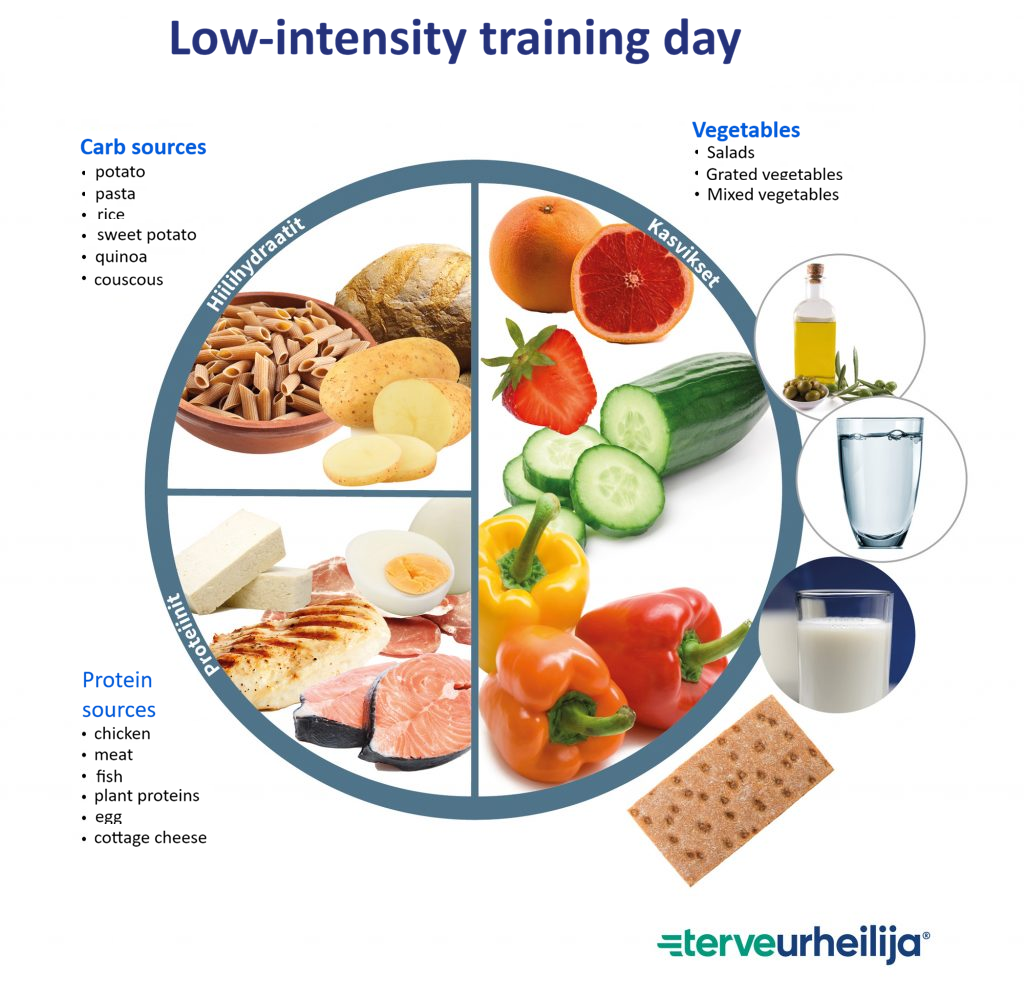
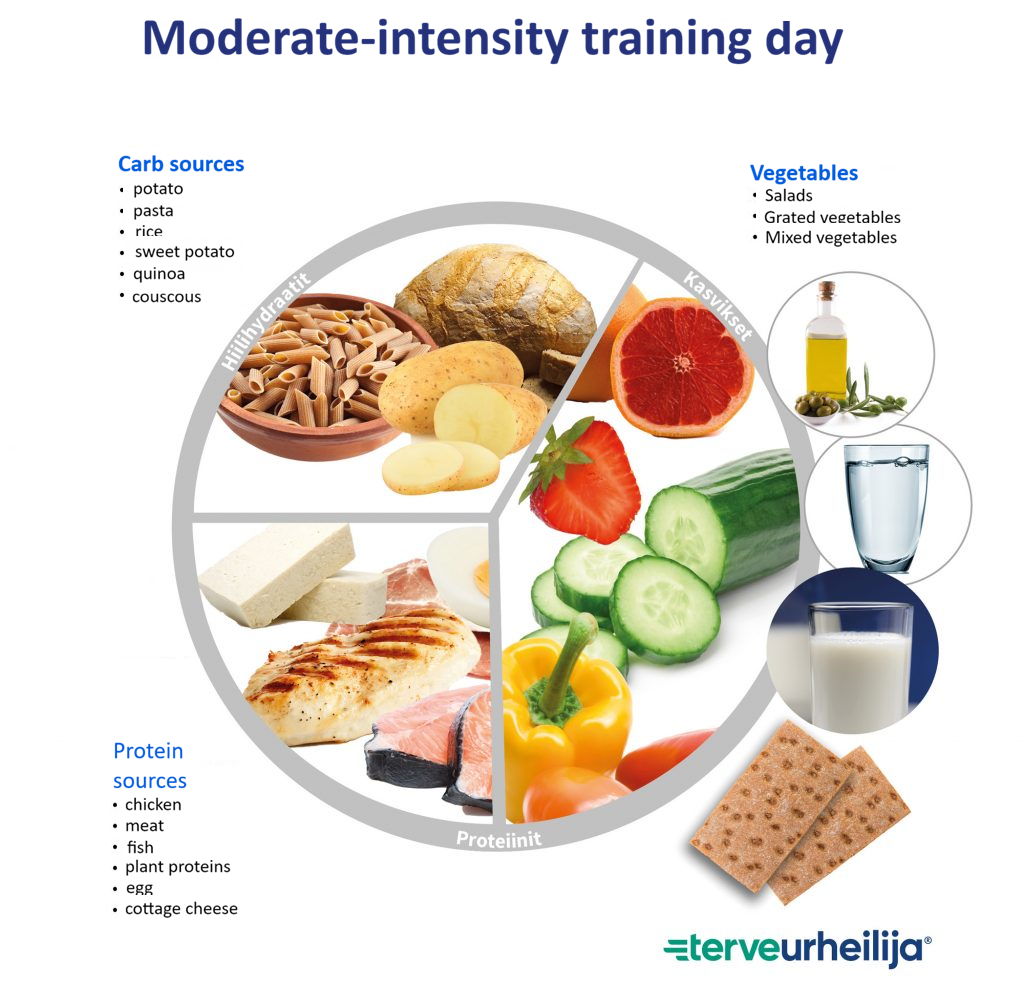
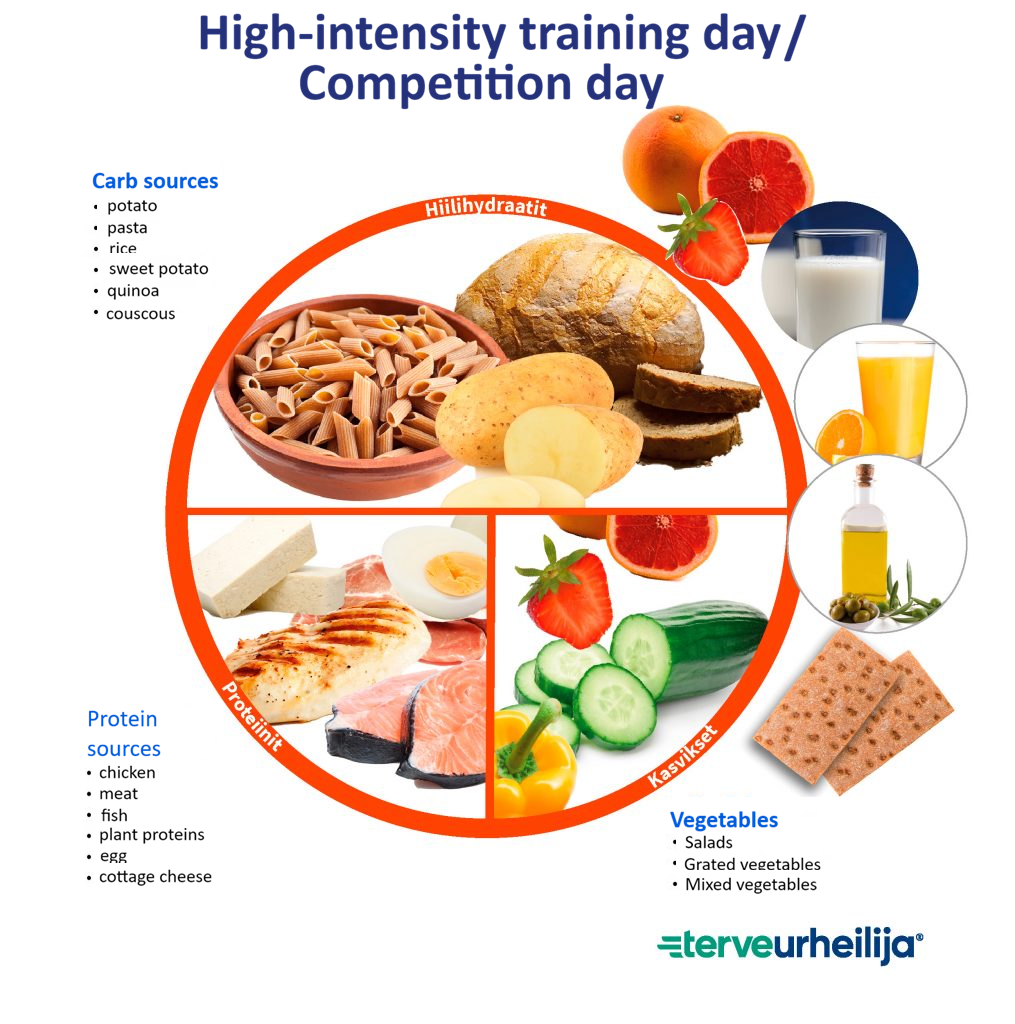
Pro Tip for Everyday Life: Use the “Athlete’s Plate” model to fuel your performance5. For low-intensity or rest days, fill half your plate with vegetables. When your training intensity ramps up, increase your carbohydrate intake—like rice, pasta, or potatoes—to match your energy needs while adjusting the vegetable portion accordingly.
Key Takeaways
Effective athlete nutrition isn’t about complex “hacks” or costly supplements, but the foundation of consistent, adequate fueling. By prioritizing balanced and sufficient energy intake, you provide your body the tools it needs to recover and improve. Ultimately, even the hardest training cannot compensate for a poor diet.
Refrences
1. Burke, L. M. et al. International Association of Athletics Federations Consensus Statement 2019: Nutrition for Athletics. Int. J. Sport Nutr. Exerc. Metab. 29, 73–84 (2019).
2. Mountjoy, M. et al. 2023 International Olympic Committee’s (IOC) consensus statement on Relative Energy Deficiency in Sport (REDs). https://doi.org/10.1136/bjsports-2023-106994 (2023) doi:10.1136/bjsports-2023-106994.
3. Nordic Nutrition Recommendations 2023 / Integrating environmental aspects. https://pub.norden.org/nord2023-003/.
4. Hydration – Fluid intake – Nutrition. Terveurheilija https://terveurheilija.fi/urheilijan-ravitsemus/nesteensaanti/.
5. Athlete’s plate model. Terveurheilija https://terveurheilija.fi/urheilijan-ravitsemus/urheilijan-lautasmalli/.
